Several people have asked me recently why I haven’t been writing as much this year on Bob’s Cluttered Desk. The short answer is: I’ve been writing. Just not here.
For the past several months, I’ve been working on something I’ve wanted to write for quite some time—a book about an idea I’ve been championing since the early-2010s.
On April 1st, that book will be released.
It’s called Thank You For Holding: Your Injury Is Important To Us — A Lightheartedly Serious Look at Workers’ Compensation Reform.
And yes, I’m aware of the date. No, it’s not a joke.
An Idea Nearly Twenty Years in the Making
In the early-2010s, I started advocating for something that seemed simple but felt revolutionary: we should stop calling our industry “workers’ compensation” and start calling it “Workers’ Recovery.”
The reasoning was straightforward. Language shapes how systems behave. A system called “compensation” focuses on paying claims. A system called “Workers’ Recovery” would focus on restoring people’s lives.
It wasn’t just wordplay. It was a fundamental reframe of what we’re actually trying to accomplish when someone gets hurt at work.
Nearly two decades later, that idea has gained real traction. We’re seeing more focus on biopsychosocial approaches to injury management. More discussion of claim advocacy and social determinants of health. More recognition that injured workers are whole people with lives, not just claim files with injury codes.
We’ve even built certification programs at WorkCompCollege.com around Workers’ Recovery principles, with hundreds of people now trained in this approach.
Progress is happening. But we haven’t finished the job.
This book is my attempt to take the Workers’ Recovery concept from advocacy to action—to show not just why we should make this change, but how we can actually do it.
What Workers’ Recovery Means
At its core, Workers’ Recovery is about a simple shift in priorities.
Instead of asking “How much does this injury cost?” we ask “How do we help this person get better?”
Instead of treating injured workers as problems to be managed, we treat them as people to be supported.
Instead of building systems around efficiency and cost containment, we build them around healing and restoration.
The remarkable thing is: when you make that shift, the outcomes improve. Not just for injured workers—for everyone. Better recovery rates. Faster return to work. Lower long-term costs. Healthier workplace cultures. More engaged employees.
Doing the right thing turns out to also be the smart thing.
We don’t need to choose between compassion and practicality. We don’t need to sacrifice injured workers’ wellbeing for the sake of system efficiency. We can have both—but only if we’re willing to rethink what success actually looks like.
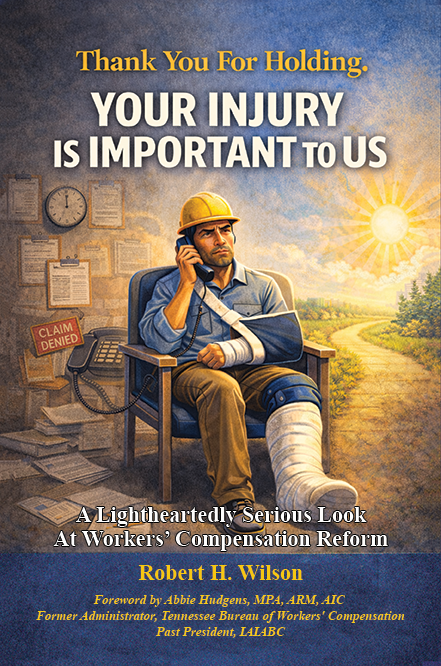 What the Book Covers
Thank You For Holding walks through what Workers’ Recovery looks like in practice.
It follows the injured worker’s journey—from the moment of injury through the reporting process, medical treatment, employer response, insurance management, and eventual return to work. At each stage, it asks: what would this look like in a system built around recovery rather than compensation?
Some of the answers are obvious. Some are surprising. All of them are achievable.
The book also addresses the practical questions: How do we measure success differently? How do we train people to think recovery-first? How do we align incentives so that everyone benefits from better outcomes? How do we get from where we are to where we should be?
These aren’t hypothetical questions. They’re the questions I’ve been working through for nearly twenty years of advocating for this change.
Why Now
The timing feels right for several reasons.
First, the workers’ compensation industry is more open to reform than it’s been in decades. The pandemic forced everyone to rethink how we work, how we support employees, and what really matters. Mental health has moved from taboo to priority. Remote work has challenged assumptions about what’s possible. We’re in a moment where fundamental change doesn’t seem radical—it seems necessary.
Second, we’re seeing the next generation of claims professionals, medical providers, and workplace safety specialists entering the field. They’re not invested in defending the status quo. They want to build something better. This book is for them.
Third, the data is increasingly clear: the old approach isn’t working as well as we need it to. We can do better. More importantly, we know how to do better. We just need to commit to actually doing it.
And finally, after nearly two decades of talking about Workers’ Recovery in blog posts, presentations, and conversations, it felt like time to put it all in one place—to make the complete case for why this matters and how we make it happen.
Who Should Read It
I wrote this book for several audiences:
For people new to workers’ compensation: An introduction to what the system could be, rather than just what it is. A vision of possibility rather than resignation.
For experienced professionals in the field: A challenge to think differently about work we’ve been doing the same way for years. Not because we’re doing it wrong, but because we can do it better.
For injured workers and their families: An explanation of what recovery-focused care looks like and why you should expect it—not as a luxury, but as a baseline standard.
For employers: A roadmap for building workplace injury programs that actually support recovery while also protecting the bottom line. These goals aren’t in conflict.
For anyone interested in how systems can be redesigned around human wellbeing: Workers’ compensation is just one system, but the principles apply broadly. How do we build systems that serve people instead of just processing them?
The Lighthearted Part
The subtitle promises “A Lightheartedly Serious Look” at reform, and that’s deliberate.
I could have written a dense policy analysis. I could have made it academic and austere. But I’m not that smart. And that’s not how you create change. That’s how you write books that gather dust.
Instead, I wrote it the way I write this blog—accessible, occasionally funny, genuinely optimistic about what’s possible when we decide to do things differently.
Because Workers’ Recovery isn’t a grim duty or a painful sacrifice. It’s actually the more hopeful path. It’s the version of this work where we get to help people heal instead of just managing their claims. Where we build systems that work with human nature instead of against it. Where we can look at what we do and feel good about it.
That’s worth being optimistic about.
What Happens Next
Thank You For Holding: Your Injury Is Important To Us releases on April 1st. It will be available through a companion site set up to promote the Recovery concept, https://WorkersRecovery.com. It will also be available through WorkCompCollege.com, as well as major booksellers in both print and digital formats.
I’ll share ordering information as we get closer to the release date. In the meantime, I wanted you to know where I’ve been and what I’ve been working on.
I also wanted to say thank you—to everyone who’s been reading this blog over the years, everyone who’s engaged with the Workers’ Recovery concept, everyone who’s told me “this makes sense” or “we should try this” or even “I’m not sure this will work but I’m willing to listen.”
I also want to thank Former Tennessee Administrator Abbie Hudgens, both for her editing input and agreeing to write the Foreword for the book.
This book exists because enough people believed the idea was worth pursuing. Now we get to see if we can turn that idea into real, lasting change.
I hope you’ll read it. I hope you’ll share it with someone who might benefit from thinking about workplace injury differently. And I hope you’ll join me in building something better than what we have now.
Because Workers’ Recovery isn’t just a rebrand. It’s a commitment to putting injured workers’ healing at the center of everything we do.
That’s the system we should have built from the beginning.
It’s not too late to build it now.